Traduttore, traditore: An act of translation is always an act of betrayal.
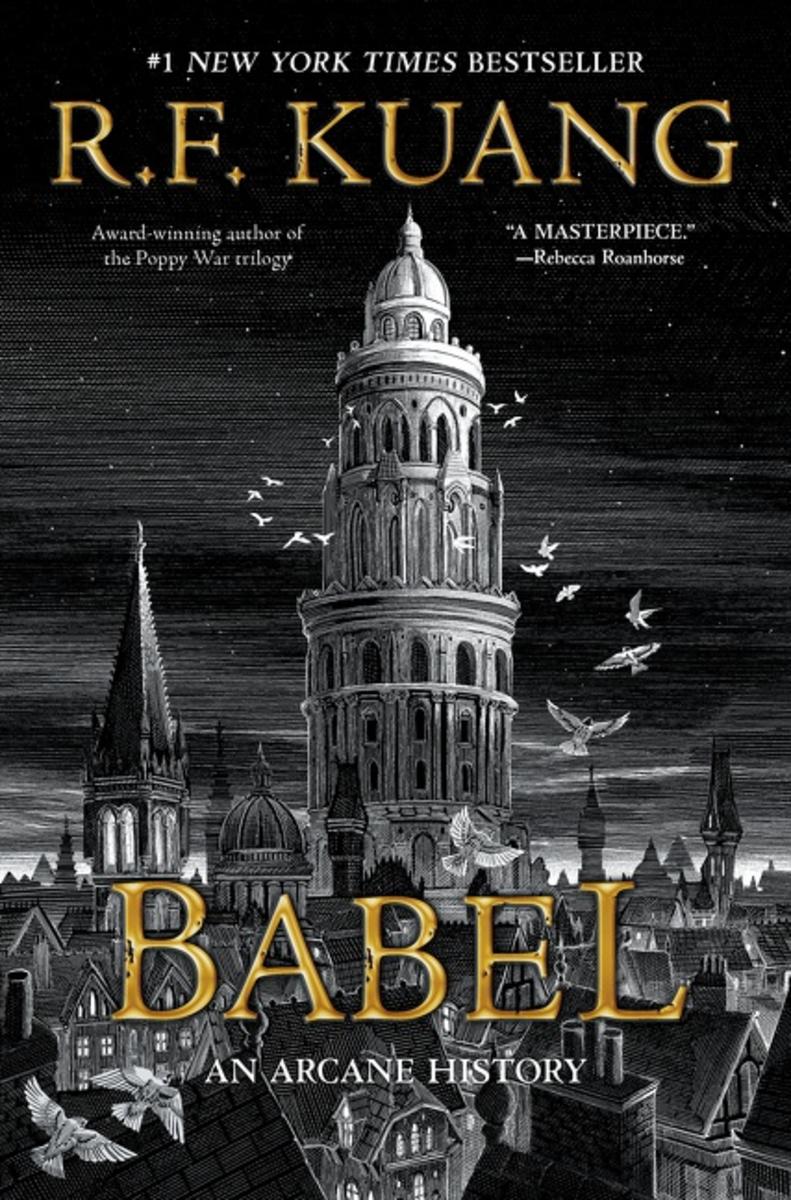
1828. Robin Swift, orphaned by cholera in Canton, is brought to London by the mysterious Professor Lovell. There, he trains for years in Latin, Ancient Greek, and Chinese, all in preparation for the day he’ll enroll in Oxford University’s prestigious Royal Institute of Translation—also known as Babel.
Babel is the world's center for translation and, more importantly, magic. Silver working—the art of manifesting the meaning lost in translation using enchanted silver bars—has made the British unparalleled in power, as its knowledge serves the Empire’s quest for colonization.
For Robin, Oxford is a utopia dedicated to the pursuit of knowledge. But knowledge obeys power, and as a Chinese boy raised in Britain, Robin realizes serving Babel means betraying his motherland. As his studies progress, Robin finds himself caught between Babel and the shadowy Hermes Society, an …
Traduttore, traditore: An act of translation is always an act of betrayal.
1828. Robin Swift, orphaned by cholera in Canton, is brought to London by the mysterious Professor Lovell. There, he trains for years in Latin, Ancient Greek, and Chinese, all in preparation for the day he’ll enroll in Oxford University’s prestigious Royal Institute of Translation—also known as Babel.
Babel is the world's center for translation and, more importantly, magic. Silver working—the art of manifesting the meaning lost in translation using enchanted silver bars—has made the British unparalleled in power, as its knowledge serves the Empire’s quest for colonization.
For Robin, Oxford is a utopia dedicated to the pursuit of knowledge. But knowledge obeys power, and as a Chinese boy raised in Britain, Robin realizes serving Babel means betraying his motherland. As his studies progress, Robin finds himself caught between Babel and the shadowy Hermes Society, an organization dedicated to stopping imperial expansion. When Britain pursues an unjust war with China over silver and opium, Robin must decide…
Can powerful institutions be changed from within, or does revolution always require violence?
What if the technology of the Industrial Revolution was different
No rating
Not my usual but I’m glad I checked it out. The alternate history was interesting and the protagonist’s viewpoint was enlightening. Overall a good read.
Great themes, good characters, and thoughtful writing
No rating
What first struck me was how this book used a smidge of magic to allow certain aspects of themes to be easier to comprehend. The writing does something with themes where it makes them recognizable and able to be investigated in more profound ways by shearing off the sides, so to speak. Yet while I noticed this up front, I was surprised how deep the book went as it reached its zenith and turned toward a conclusion. There were comments about colonialism and empire that I recognized, but the way they were delved into thanks to the aforementioned tactic struck me more deeply than I could have expected. The characters, despite being somewhat symbolic in their deployment, also grew on me immensely. It made me think, and it made my eyes tear up a few times. And that's without mentioning all the fun translation, history, and cultural movement details the …
What first struck me was how this book used a smidge of magic to allow certain aspects of themes to be easier to comprehend. The writing does something with themes where it makes them recognizable and able to be investigated in more profound ways by shearing off the sides, so to speak. Yet while I noticed this up front, I was surprised how deep the book went as it reached its zenith and turned toward a conclusion. There were comments about colonialism and empire that I recognized, but the way they were delved into thanks to the aforementioned tactic struck me more deeply than I could have expected. The characters, despite being somewhat symbolic in their deployment, also grew on me immensely. It made me think, and it made my eyes tear up a few times. And that's without mentioning all the fun translation, history, and cultural movement details the writing wove in so elegantly! As a professional translator, it captured my intellect, my heart, and my imagination.
A truly amazing book. The voice is powerful, the vibe immaculate. I hate to compare a wonderful work of fantasy to Harry Potter, but it scratches an itch to have a British magical school story that is so well written. Also of note is the way she writes the main characters friendships, it is the most wholesome display of platonic devotion I've ever read. Between that and her descriptions of life on campus I feel like I lived the life of an academic, and experienced things second hand that I've never gotten the chance to before.
A truly amazing book. The voice is powerful, the vibe immaculate. I hate to compare a wonderful work of fantasy to Harry Potter, but it scratches an itch to have a British magical school story that is so well written. Also of note is the way she writes the main characters friendships, it is the most wholesome display of platonic devotion I've ever read. Between that and her descriptions of life on campus I feel like I lived the life of an academic, and experienced things second hand that I've never gotten the chance to before.
Kuang's story surprises. This coming-of-age (and coming-of-revolution) story introduces us to a world where the the 19th-century Industrial Revolution is made possible not by steam and worker oppression but by the magical powers of translation and colonial exploitation. The experiences of the protagonist, a Cantonese boy that adopts the English name Robin Swift, lead us to an imagined Oxford that is as intriguing as Hogwarts but that has sins that Kuang not only does not whitewash, but makes the centerpiece of her novel. The historical notes and especially the etymological explanations are fascinating, if occasionally pedantic. Once you get your head around this world and how it works, you'll want to hang on to the end to see how a postcolonial critique during the height of the British Empire can possibly turn out.
Kuang's story surprises. This coming-of-age (and coming-of-revolution) story introduces us to a world where the the 19th-century Industrial Revolution is made possible not by steam and worker oppression but by the magical powers of translation and colonial exploitation. The experiences of the protagonist, a Cantonese boy that adopts the English name Robin Swift, lead us to an imagined Oxford that is as intriguing as Hogwarts but that has sins that Kuang not only does not whitewash, but makes the centerpiece of her novel. The historical notes and especially the etymological explanations are fascinating, if occasionally pedantic. Once you get your head around this world and how it works, you'll want to hang on to the end to see how a postcolonial critique during the height of the British Empire can possibly turn out.
Nautin kovasti R. F. Kuangin Poppy War -trilogiasta, ja Babel on odottanut jo jonkin aikaa hyllyssä lukemista.
Ensi alkuun tuntui, että odotukset täyttyivät. Tapani mukaan en lukenut kirjasta edes takakantta, joten koko kirjan lähtökohta tuli yllätyksenä. Ajatus käännösten merkityseroista maailmaa pyörittävänä käyttövoimana oli toisaalta vitsikäs mutta toisaalta antoi vallan käyttökelpoisen tavan käsitellä kolonialistista yhteiskuntaa. Kuangin kerronta vei tarinaa eteenpäin kuin juna.
Jossain vaiheessa jännite kuitenkin katosi. Kirja oli alusta loppuun sujuvaa luettavaa, mutta viimeinen kolmannes on lähinnä loppukliimaksin odottamista, jossa tuntuu, että mitään merkittävää ei tapahdu. Tämä ei tietenkään pidä paikkaansa - kyllähän kirjassa tapahtuu, paljonkin, mutta tunteet, joita lukiessa voisi kuvitella heräävän, jäävät syttymättä.
Lopussa hiukan pedataan siihen suuntaan, että kirjalle voisi tulla myös jatkoa, mutta Kuang on ilmeisesti ilmoittanut, että toista kirjaa ei ole luvassa. Yllä kirjoittamastani huolimatta se ehkä hivenen harmittaa.